
If you’ve been planning a dream trip to the Eiffel Tower, the Colosseum, or the canals of Amsterdam, the rules of the road are changing. For decades, travelers from countries like the US, Canada, the UK, and Australia have enjoyed "visa-free" entry into the Schengen Zone.
However, starting in 2026, the European Union is officially launching ETIAS.
In this guide, we’ll break down what ETIAS is, who needs it, and how to ensure your European vacation doesn't get cut short at the boarding gate.
What is ETIAS? (The 2026 Travel Shift)
ETIAS stands for the European Travel Information and Authorisation System. It is not a visa in the traditional sense; rather, it is a pre-travel screening system designed to increase security across European borders.
Think of it like the U.S. ESTA or the Canadian eTA. It’s an electronic "thumbs up" from the EU that says you are cleared to enter.
Key Facts at a Glance:
Launch Date: 2026 (Full implementation).
Cost: €7 (approximately $7.50 USD / £6 GBP).
Validity: 3 years (or until your passport expires).
Processing Time: Minutes (usually), but can take up to 30 days.
Who Needs an ETIAS to Enter Europe?
The biggest misconception is that ETIAS applies to everyone. It specifically targets citizens of 60+ visa-exempt countries.
If you previously traveled to Europe with just your passport and no paperwork, you will need an ETIAS in 2026. This includes citizens of:
United States
United Kingdom
Canada
Australia
New Zealand
Japan
South Korea
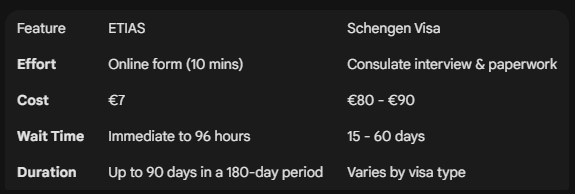
ETIAS vs. Schengen Visa: What’s the Difference?
Many travelers are searching for "Is ETIAS a visa?" The answer is no. Here’s the breakdown:
How to Apply for ETIAS in 2026: A Step-by-Step Guide
Visit the Official Portal: Only apply through the official EU ETIAS website (ending in .europa.eu). Avoid third-party sites charging "service fees."
Gather Your Documents: You only need a valid biometric passport. Your passport must be valid for at least 3 months beyond your intended stay.
Complete the Form: You will be asked for personal data, occupation, and questions regarding previous travel to conflict zones or criminal records.
Pay the Fee: The €7 fee is waived for travelers under 18 and over 70.
Check Your Email: Most approvals are sent within minutes. Print a copy or keep the digital PDF on your phone.
Top 3 Mistakes That Could Get Your ETIAS Denied
To rank for "ETIAS denial reasons," keep these tips in mind:
Typing Errors: A misspelled name or a wrong passport number is the #1 reason for instant rejection.
Passport Expiry: If your passport expires in less than 3 months, your ETIAS will likely be denied.
Using Unofficial Sites: Many "middleman" websites are popping up. Using them can result in your data being stolen or paying 10x the actual price.
The Future of European Travel
The introduction of ETIAS in 2026 is part of a global trend toward digital borders. While it adds one more step to your vacation planning, it is designed to make entry into the Schengen Area faster and more secure in the long run.
Planning a trip to Europe in 2026? Bookmark this page for the latest updates on ETIAS rollout dates and border requirements.